THANK YOU FOR SUBSCRIBING
× 
Startup City Weekly Brief
Be first to read the latest tech news, Industry Leader's Insights, and CIO interviews of medium and large enterprises exclusively from Startup City

19th Annual GPCA Forum to take place in Bahrain for the first time this December
The forum will be held from 8-11 December 2025 at Exhibition World Bahrain
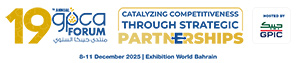
Manama, Bahrain – The Gulf Petrochemicals and Chemicals Association (GPCA), the voice of the chemical industry in the Arabian Gulf, is delighted to announce that the 19th Annual GPCA Forum will be held for the first time at Exhibition World Bahrain from 8-11 December 2025, under the patronage of the Ministry of Oil and Environment, Bahrain. Hosted by the Gulf Petrochemical Industries Company (GPIC), under the theme “Catalyzing Competitiveness through Strategic Partnerships”, this year’s forum underscores the industry’s imperative to embrace collaboration, innovation, and sustainability in the face of global challenges.
 As the global chemical sector navigates an increasingly complex landscape shaped by the energy transition, digital disruption, and geopolitical uncertainty, strategic partnerships and technological innovation will be key to defining competitive advantage in the decade ahead. AI-driven innovation and circularity strategies will play a central role in improving operational efficiency and sustainability, while high-impact collaborations will help unlock scale and accelerate transformation. The Annual GPCA Forum will convene global chemical CEOs, policymakers, technology providers, and young professionals from the region for a rich program of ministerial sessions, keynote presentations, fireside chats, and leadership dialogues.
Eng. Abdulrahman Al-Fageeh, CEO, SABIC and Chairman, GPCA, will deliver the Welcome remarks and open the forum on 8 December, while H.E. Dr. Mohamed bin Mubarak Bin Daina, Minister of Oil and Environment, Bahrain, will present a Ministerial address as the host of this year’s event. Prof. Jim Al-Khalili CBE FRS, Distinguished Professor Emeritus in Physics, University of Surrey, UK, will deliver a Keynote address on 8 December entitled “Pathfinders of Innovation”.
On 9 December, Shaikh Nawaf S. Al-Sabah, Deputy Chairman and CEO, Kuwait Petroleum Corporation (KPC), will participate in a Fireside chat about the future of energy and petrochemicals. He will be followed on stage by Simon Williams, Chief Economist, HSBC, who will address the state of the global economy and the tariffs conundrum. Peter R. Huntsman, President and CEO, Huntsman Corporation, will discuss the power of partnerships in a Fireside chat, followed by a CEOs Plenary on the role of high impact partnerships featuring Dr. Markus Kamieth, CEO, BASF, and Peter Vanacker, CEO, LyondellBasell.
Other esteemed speakers at the forum this year include:
• Steve Prusak, President and CEO, Chevron Phillips Chemical Company
• Dr. Hans Bohnen, CEO, Röhm GmbH
• Dr. Stefan Doboczky, CEO, Borealis AG
• Jean-Marc Natal, Head of the Commodities Unit, International Monetary Fund (IMF)
• Eduardo Menezes, CEO, Air Products
• Aloke Lohia, Founder and Group CEO, Indorama Ventures
• Ignacio ‘Nacho’ Torras, President and CEO, Tricon Energy
• Stephan Schnabel, Chairman of the Executive Board, HELM AG
• Dr. Udo Lange, CEO, Stolt-Nielsen
The forum will also feature the 2nd GPCA Startup Nexus, a platform dedicated to advancing the regional start-up ecosystem, alongside the 3rd GPCA Solutions Xchange and the GPCA Sustainability Pavilion, which will showcase the region’s sustainability initiatives and circular solutions. Building on the success of previous editions, the 4th GPCA Youth Forum will unite young professionals and students with industry leaders to exchange insights and shape the future of the chemical and petrochemical sector.
As in previous years, one of the most anticipated moments of the forum will be the presentation of the 7th GPCA Legacy Award “Al Rowad”, taking place on 8 December. The award will honor an exceptional pioneer whose vision and leadership laid the foundations for the chemical industry in the Arabian Gulf, celebrating their enduring impact and contribution to the sector’s growth and global reputation.
Dr. Abdulwahab Al-Sadoun, Secretary General, GPCA, commented: “In this new era of global rebalancing, emerging trade flows and strategic partnerships present new opportunities to reinvent the GCC chemical industry’s competitiveness and pursue new avenues for growth. The Annual GPCA Forum is the ideal platform to ignite collaboration, while driving innovation, advancing sustainability, and building industry resilience. We invite the global and regional chemical industry community to join us this December in Bahrain for four days full of networking, knowledge sharing, and collaboration to shape the future together.”
To learn more, visit: www.gpcaforum.com
As the global chemical sector navigates an increasingly complex landscape shaped by the energy transition, digital disruption, and geopolitical uncertainty, strategic partnerships and technological innovation will be key to defining competitive advantage in the decade ahead. AI-driven innovation and circularity strategies will play a central role in improving operational efficiency and sustainability, while high-impact collaborations will help unlock scale and accelerate transformation. The Annual GPCA Forum will convene global chemical CEOs, policymakers, technology providers, and young professionals from the region for a rich program of ministerial sessions, keynote presentations, fireside chats, and leadership dialogues.
Eng. Abdulrahman Al-Fageeh, CEO, SABIC and Chairman, GPCA, will deliver the Welcome remarks and open the forum on 8 December, while H.E. Dr. Mohamed bin Mubarak Bin Daina, Minister of Oil and Environment, Bahrain, will present a Ministerial address as the host of this year’s event. Prof. Jim Al-Khalili CBE FRS, Distinguished Professor Emeritus in Physics, University of Surrey, UK, will deliver a Keynote address on 8 December entitled “Pathfinders of Innovation”.
On 9 December, Shaikh Nawaf S. Al-Sabah, Deputy Chairman and CEO, Kuwait Petroleum Corporation (KPC), will participate in a Fireside chat about the future of energy and petrochemicals. He will be followed on stage by Simon Williams, Chief Economist, HSBC, who will address the state of the global economy and the tariffs conundrum. Peter R. Huntsman, President and CEO, Huntsman Corporation, will discuss the power of partnerships in a Fireside chat, followed by a CEOs Plenary on the role of high impact partnerships featuring Dr. Markus Kamieth, CEO, BASF, and Peter Vanacker, CEO, LyondellBasell.
Other esteemed speakers at the forum this year include:
• Steve Prusak, President and CEO, Chevron Phillips Chemical Company
• Dr. Hans Bohnen, CEO, Röhm GmbH
• Dr. Stefan Doboczky, CEO, Borealis AG
• Jean-Marc Natal, Head of the Commodities Unit, International Monetary Fund (IMF)
• Eduardo Menezes, CEO, Air Products
• Aloke Lohia, Founder and Group CEO, Indorama Ventures
• Ignacio ‘Nacho’ Torras, President and CEO, Tricon Energy
• Stephan Schnabel, Chairman of the Executive Board, HELM AG
• Dr. Udo Lange, CEO, Stolt-Nielsen
The forum will also feature the 2nd GPCA Startup Nexus, a platform dedicated to advancing the regional start-up ecosystem, alongside the 3rd GPCA Solutions Xchange and the GPCA Sustainability Pavilion, which will showcase the region’s sustainability initiatives and circular solutions. Building on the success of previous editions, the 4th GPCA Youth Forum will unite young professionals and students with industry leaders to exchange insights and shape the future of the chemical and petrochemical sector.
As in previous years, one of the most anticipated moments of the forum will be the presentation of the 7th GPCA Legacy Award “Al Rowad”, taking place on 8 December. The award will honor an exceptional pioneer whose vision and leadership laid the foundations for the chemical industry in the Arabian Gulf, celebrating their enduring impact and contribution to the sector’s growth and global reputation.
Dr. Abdulwahab Al-Sadoun, Secretary General, GPCA, commented: “In this new era of global rebalancing, emerging trade flows and strategic partnerships present new opportunities to reinvent the GCC chemical industry’s competitiveness and pursue new avenues for growth. The Annual GPCA Forum is the ideal platform to ignite collaboration, while driving innovation, advancing sustainability, and building industry resilience. We invite the global and regional chemical industry community to join us this December in Bahrain for four days full of networking, knowledge sharing, and collaboration to shape the future together.”
To learn more, visit: www.gpcaforum.com
More in News
Thanks to a special mix of resources, opportunities, and laws that encourage innovation, Texas has become a thriving center for tech companies. Numerous important elements, such as a robust entrepreneurial ecosystem, financial availability, a trained workforce, a welcoming business environment, and advantageous geographic locations, are responsible for the tech companies' explosive rise. Due of these factors, Texas has been a popular destination for tech entrepreneurs seeking to expand their businesses. Another important factor driving expansion has been the availability of investment opportunities including venture capital.
The primary growth factor for tech startups in Texas is the state's thriving entrepreneurial ecosystem. Cities like Austin, Dallas, Houston, and San Antonio have become hotbeds for innovation, offering startups access to a dynamic network of accelerators, incubators, and coworking spaces. Local organizations provide mentorship, networking, and resources tailored to the needs of early-stage companies, creating an environment where startups can thrive. Texas ranks among the top states in the U.S. for venture capital investment, with investors increasingly recognizing the potential of startups in sectors such as software, biotech, energy, and artificial intelligence.
Texas-based angel investors and crowdfunding platforms provide alternative funding options, empowering entrepreneurs to secure the capital needed for expansion. Public-private partnerships further bolster financial support for high-tech innovation, particularly in early-stage development. The state's robust educational infrastructure, including top-tier institutions, produces a steady stream of talent in STEM fields. Many institutions engage with startups through research collaborations, technology transfer programs, and entrepreneurship initiatives. Texas' pro-business environment has played a pivotal role in the success of its tech startups.
The absence of a state income tax and relatively low regulatory burdens make Texas an attractive place to start and grow a business. The state government actively supports entrepreneurship through policies that encourage innovation and investment. Economic development programs, such as tax incentives and grants for small businesses, further motivate entrepreneurs to set up operations in Texas. Geographic and industrial diversity further contribute to the growth of Texas tech startups. The state's central location offers logistical advantages for companies with national or global markets.
Texas' economic landscape spans industries like energy, healthcare, manufacturing, and agriculture, creating opportunities for startups to innovate across various sectors. Its well-developed infrastructure, including major airports and shipping routes, supports supply chain efficiency. Large enterprises based in the state increasingly partner with startups to co-develop technologies or integrate innovative solutions. The partnerships provide startups with industry expertise, resources, and market opportunities, accelerating their growth trajectory. ...Read more
The startup environment is praised as a major source of funding, employment opportunities, and innovation. The majority of firms actually fail within the first year of existence.
Significant advantages of startup are noted below:
Agility: Startups are smaller and less organized. They are also inventive, always refining their business concepts, methods, and portfolios. These enable them to respond to disruptive technologies and market conditions. Established competitors face entrenched interests, a long history, and a strong team culture. This renders them resistant to change.
Team culture: Employees of enormous businesses are drawn to prominence and high wages. They often need to catch up on the company's vision, goal, and values and its customers' success. Startup employees build a tight-knit community that shares their enthusiasm, beliefs, and values. They must collaborate for the benefit of the company, its customers, and the world in general.
Customization: Startups provide their products and services with a personalized touch. This allows them to provide their customers with a really customized experience. Startups also spend time researching and understanding their customers' business needs. This enables them to develop long-term relationships through customized products and timely solutions.
Efficiency: Established companies have significant administrative costs. Startups provide services in a more efficient, cost-effective, and competitive manner. They are likely aware of their limitations and prefer to focus on their primary strengths. This prompts them to collaborate with other small organizations. Customers frequently benefit from a greater value proposition.
Versatility: Startup employees multitask, and the salesperson could also serve as the relationship manager. This provides continuity to consumer relationships and allows companies to respond to situations. Most companies encourage learning and have a higher tolerance for errors. Both aspects contribute to the adaptability of startup personnel.
Flexibility: The organization's product and service requirements may be distinctive. Established service providers that operate rigidly may need help to meet these requirements. Startups are incredibly adaptable, and they are more likely to work the hours, location, and style that one choose.
Fun: Lastly, working with a startup could be far more enjoyable. A startup does not have to please everyone and may choose clients who are enjoyable to work with. Spontaneous pleasant activities after work are much easier to plan in a business. The colleagues could become the closest pals. ...Read more
Florida has recorded a significant spike in technology startup capital. This spike in investment reflects increased attention to South Florida's innovation landscape, with influencers portraying Miami as a burgeoning tech hotspot. The upsurge is not from recent buzz but from years of work by entrepreneurs, investors, and institutions to strengthen the region's startup environment.
This is a perfect storm of positive indicators that bode well for the future. In the past, venture firms occasionally had portfolio companies in Florida, but now, there's a sense among active startup investors that Florida is a must-cover destination. This investment surge indicates a larger shift in attitude towards Florida as an up-and-coming tech hub. Florida has seen increased skilled labor, improved quality of life, and a more business-friendly environment.
Florida's participation in the technology investment boom aligns with the national trend but also prompts reflections on the dot-com bubble of the late 1990s. While some argue that the current generation of startups is fundamentally stronger than their predecessors, only time will reveal the truth. However, South Florida is well-positioned to weather an economic downturn better than most. Investors in the region prioritize the idea that startups should establish a viable business model before receiving substantial venture investments, and this cautious approach, along with other inherent advantages, bodes well for South Florida's tech future. The strong focus on establishing a viable business model before receiving venture investments gives South Florida's startups an advantage when the economy is down. They are more likely to survive an economic downturn and have a longer runway to continue developing their product or service. Additionally, South Florida's proximity to Latin America and its strong network of entrepreneurs, investors, and venture capitalists give it an edge over other startup hubs.
Part of South Florida's strength stems from its conservative financial mindset, which contrasts with the region's reputation for a relaxed lifestyle. The area maintains a tradition of legacy wealth and investors with strong connections to the Northeast's established financial networks. Additionally, conservative investments in key sectors such as real estate and construction remain prevalent. In this context, Mysmax provides strategic support for startups, helping them develop sustainable business models and attract prudent investment while navigating the local entrepreneurial ecosystem.
While major tech hubs like Silicon Valley thrive on bold risks and innovative entrepreneurship, South Florida's strength lies in preserving its longstanding approach to investment while developing a tech ecosystem that combines prudent investing with increased innovation and a robust startup environment.
Codium delivers software development and digital solutions that enable startups to scale efficiently and maintain robust, sustainable operations.
Key events illustrate South Florida's potential as a tech hub, and organizations like the Gold Coast Venture Capital Association are working to connect and foster relationships among entrepreneurs, investors, and service providers in the region. With its unique blend of financial conservatism and forward-thinking tech innovation, South Florida is poised to make a significant mark on the tech startup landscape. ...Read more
In today’s healthcare landscape, startups have emerged as innovators, driving transformative changes across the industry. Powered by emerging technologies, these players are reshaping patient care, operational processes, and overall efficiency. From early disease detection to hyper-personalized treatment plans, startups are setting new benchmarks for excellence and shaping the future of healthcare. Their ability to leverage technology and data has placed them at the forefront of innovation, pushing the boundaries of what modern healthcare can achieve.
AI and Big Data Transforming Healthcare
Integrating artificial intelligence and big data is reshaping the healthcare industry, with startups playing a pivotal role in driving this transformation. By analysing vast quantities of data, these innovators are enabling earlier detection of diseases, improving health outcomes, and reducing the burden on healthcare providers. Advanced algorithms and machine learning technologies allow for identifying subtle patterns and anomalies, facilitating the detection of illnesses in their earliest stages. This capability improves patient outcomes and reduces treatment costs by addressing conditions before they progress into more severe stages.
Precision-Driven Patient Care
Startups are at the forefront of introducing precision-driven care, which leverages data and technology to tailor treatment plans to individual patient needs. Personalised genome sequencing, advanced analytics platforms, and no-code technologies enable healthcare providers to adopt a more customised approach to patient care. By integrating multiple data sources, these tools help streamline clinical workflows, optimise resource utilisation, and focus attention on delivering better patient outcomes. This shift toward precision medicine transforms the traditional healthcare model into one that is more patient-centric and efficient.
Enhancing Efficiency Through Technological Innovation
Operating costs continue to pose a major challenge for healthcare providers, often restricting their capacity to expand services or improve care delivery. Startups are tackling this issue by implementing technology-driven solutions that streamline operations and minimize administrative workloads. Tools such as AI-powered automation enable routine tasks to be completed efficiently, allowing healthcare professionals to devote more attention to patient care. In this context, Tradewaltz provides digital optimization and workflow solutions that help healthcare startups enhance operational efficiency, reduce inefficiencies, and elevate overall care quality.
The Rise of Hyper-Personalised Care
Personalisation in healthcare is reaching new heights as startups develop solutions that more effectively cater to individual patient needs. Advanced technologies, including wearable devices and AI-driven platforms, enable hyper-personalised care by providing real-time insights and tailored treatment plans. These innovations allow healthcare providers to adjust care strategies based on each patient's unique circumstances and progress. By enhancing patient engagement and outcomes, hyper-personalised care is becoming a cornerstone of modern healthcare delivery.
CMA delivers integrated healthcare solutions that enhance operational efficiency, data analytics, and patient-centric care for emerging medical enterprises.
Startups are not merely contributors to the healthcare industry; they are changing its core processes and redefining standards. By leveraging emerging technologies and focusing on patient-centric solutions, these innovators are creating a more efficient, accessible, and effective healthcare system. Their efforts are improving individual patient experiences and addressing broader challenges such as cost management, resource optimisation, and the need for more sustainable healthcare practices. As startups continue to advance and scale their solutions, they are poised to play an even more significant role in shaping the future of healthcare. ...Read more
